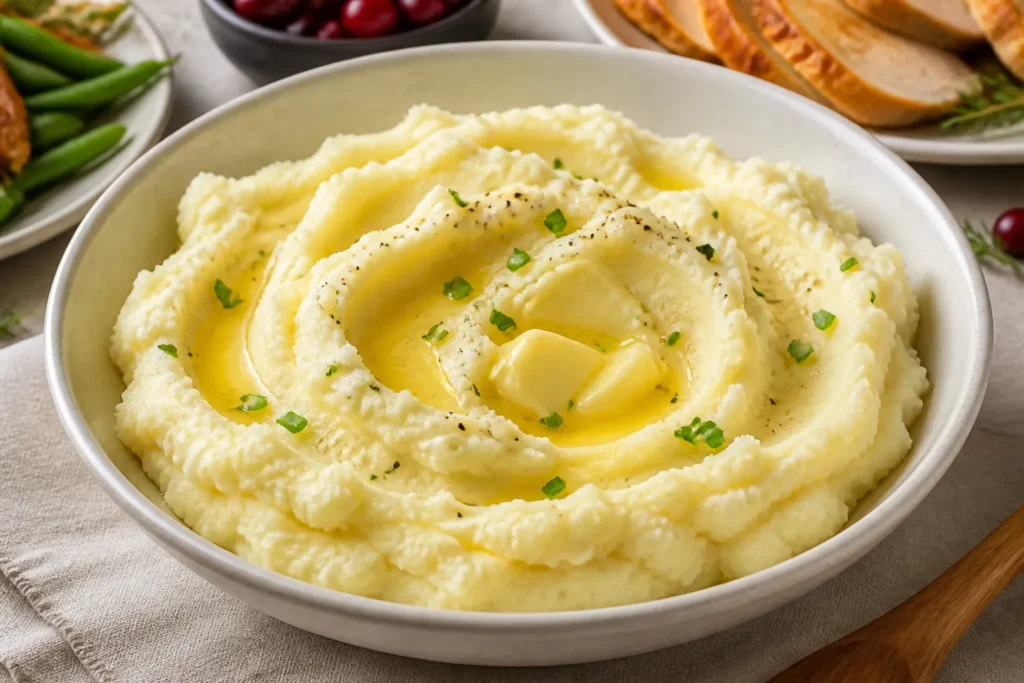
Thanksgiving Mashed Potatoes – Creamy, Comforting, and Crowd-Pleasing
Rate this recipe:
Mashed potatoes are often the quiet hero of the Thanksgiving table. They’re simple, nostalgic, and universally loved. The goal isn’t just fluffiness—it’s a bowl of silky, buttery potatoes that feel like a warm hug. This recipe gives you rich flavor, a smooth texture, and just enough structure to hol
Ingredients
- 3 pounds Russet or Yukon Gold potatoes, peeled and cut into 1 1/2-inch chunks
- 2 teaspoons kosher salt, plus more to taste
- 6 tablespoons unsalted butter, divided (more for serving, if you like)
- 3/4 to 1 cup whole milk or heavy cream, warmed
- 1/4 cup sour cream (optional for extra tang and creaminess)
- 2 cloves garlic, smashed (optional, for infused butter)
- Freshly ground black pepper, to taste
- Chives or parsley, finely chopped (optional garnish)
Method
- Prep the potatoes: Peel and cut the potatoes into even chunks so they cook at the same rate. Rinse briefly under cold water to remove excess surface starch.
- Start in cold water: Place the potatoes in a large pot and cover with cold water by about an inch. Add 2 teaspoons of kosher salt. Starting cold ensures even cooking from edge to center.
- Boil until tender: Bring to a gentle boil, then reduce to a simmer. Cook 12–18 minutes, until a fork slides in easily without resistance but the pieces don’t fall apart.
- Warm the dairy: While potatoes cook, melt 4 tablespoons butter in a small saucepan with the smashed garlic (if using). Add the milk or cream and heat just until warm. Remove garlic and discard. Warm dairy blends more smoothly and keeps the mash fluffy.
- Drain well and dry: Drain the potatoes thoroughly. Return them to the hot pot over low heat for 1–2 minutes, shaking gently to steam off excess moisture. Dry potatoes = creamier mash.
- Mash your way: Use a potato masher for rustic texture, a ricer for ultra-smooth results, or a food mill for something in between. Avoid a food processor or blender—they can make potatoes gluey.
- Add fat first: Add the warm butter mixture to the dry potatoes and fold gently. Fat coats the starch granules, which helps prevent gumminess.
- Adjust with dairy: Gradually add warm milk or cream until you reach your ideal consistency. Stir gently to keep air in the mash and avoid overworking.
- Finish with tang and seasoning: Fold in sour cream, if using. Season with salt and black pepper to taste. Add the remaining 2 tablespoons of butter on top to melt for a glossy finish.
- Garnish and serve: Sprinkle with chopped chives or parsley, if you like. Serve hot, ideally in a warmed bowl so the mash stays creamy longer.
Notes
- Refrigerate: Store leftovers in an airtight container for up to 4 days. Press plastic wrap directly onto the surface to reduce dryness.
- Freeze: Mashed potatoes freeze well if they contain enough fat. Cool completely, then freeze for up to 2 months. Thaw overnight in the fridge.
- Reheat: Warm gently on the stove over low heat or in the microwave at 50% power, stirring occasionally. Add a splash of warm milk or cream and a knob of butter to restore silkiness.
- Make-ahead tip: For Thanksgiving, make 1–2 days ahead. Reheat in a covered baking dish at 325°F, stirring once or twice and adding warm cream if needed.
Tried this recipe?
Let us know how it was! ♡
Let us know how it was! ♡