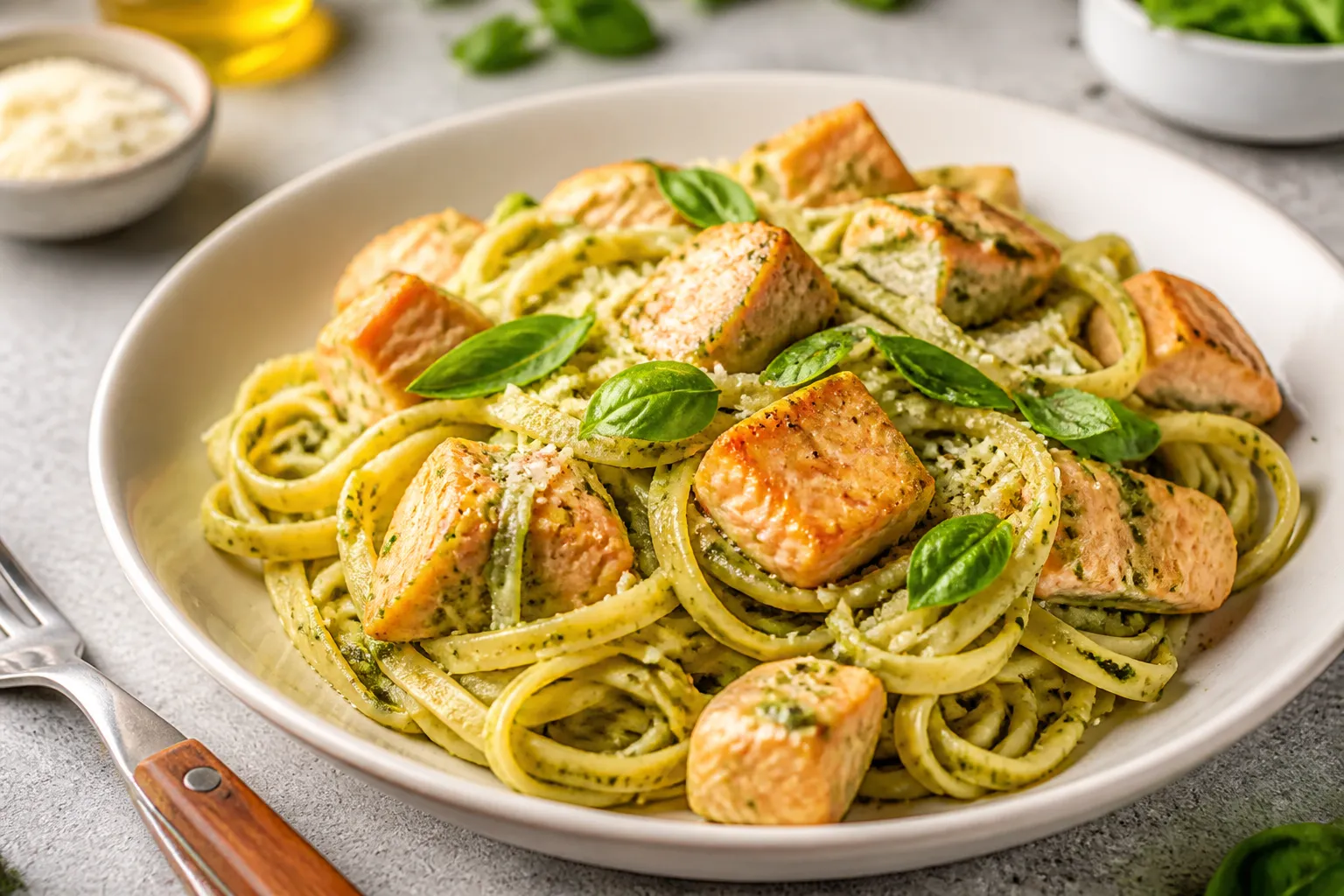
Salmon Pesto Pasta – Fresh, Creamy, and Weeknight-Friendly
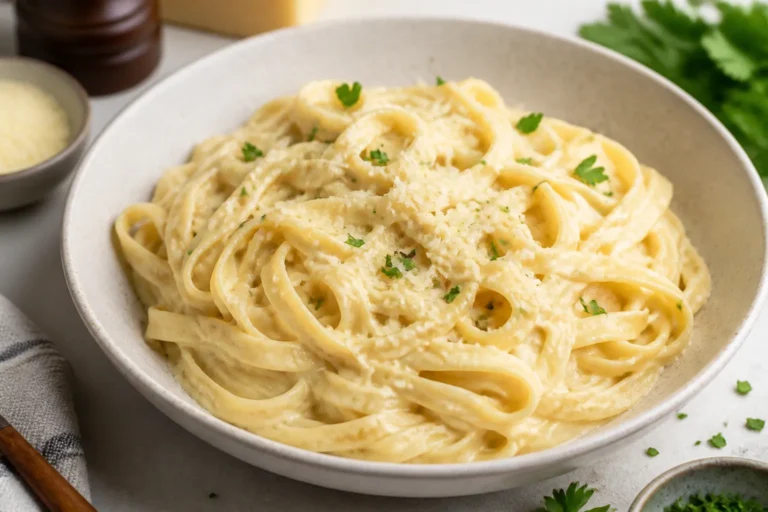
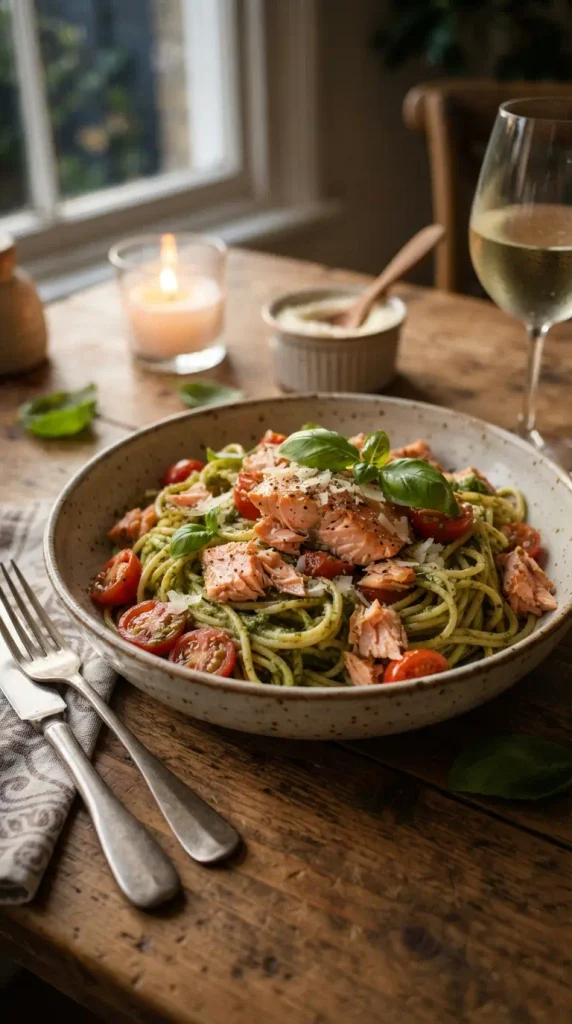
This salmon pesto pasta is the kind of meal you make once and keep coming back to. It’s bright, creamy, and full of fresh basil flavor, with tender flakes of salmon tucked into twirls of pasta. The whole dish comes together in about 30 minutes, and it feels special without being fussy.
Serve it on a busy weeknight or for a simple dinner with friends. It tastes like something from a cozy neighborhood café—only easier and lighter on the wallet.
Why This Recipe Works
This recipe hits that sweet spot of fast and flavorful. The salmon cooks quickly and flakes beautifully into the sauce, adding richness without needing heavy cream.
Pesto brings a burst of fresh herbs, garlic, and lemony brightness, which balances the fatty salmon perfectly. A splash of pasta water helps the pesto cling to the noodles, creating a silky coating. With a few pantry staples and fresh basil pesto, you get a restaurant-quality dish in minutes.
Ingredients
- 12 oz (340 g) pasta (linguine, spaghetti, or short pasta like penne)
- 12–16 oz (340–450 g) salmon fillet, skin-on or skinless, pin bones removed
- 1/2 teaspoon kosher salt, plus more for pasta water
- 1/4 teaspoon black pepper
- 1–2 tablespoons olive oil
- 1 cup basil pesto (store-bought or homemade)
- 1/2 cup reserved pasta cooking water (you may not need all of it)
- 1–2 teaspoons lemon juice, plus extra wedges for serving
- 1/4 cup grated Parmesan, plus more for topping
- 1/4 teaspoon red pepper flakes (optional)
- 1 cup cherry tomatoes, halved (optional but great for freshness)
- Fresh basil leaves, for garnish (optional)
Step-by-Step Instructions
- Boil the pasta. Bring a large pot of salted water to a rolling boil.
Add the pasta and cook until just shy of al dente, according to package directions. Before draining, scoop out at least 1/2 cup of pasta water and set aside.
- Season the salmon. Pat the salmon dry with paper towels. Sprinkle with 1/2 teaspoon salt and 1/4 teaspoon pepper.
If using skin-on salmon, leave the skin on for easier cooking.
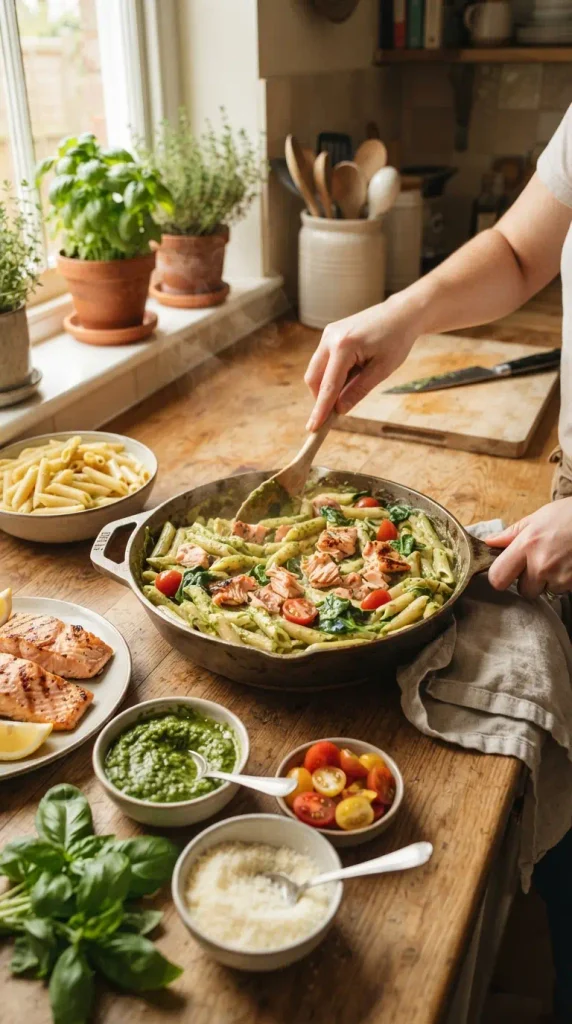
- Cook the salmon. Heat 1–2 tablespoons olive oil in a large skillet over medium heat. Place the salmon skin-side down (if applicable) and cook 4–5 minutes, until the skin is crisp and the sides turn opaque halfway up. Flip and cook another 2–4 minutes, depending on thickness, until just cooked through and flaky.
- Flake the salmon. Transfer salmon to a plate.
Remove and discard the skin if present. Use a fork to gently flake the fish into bite-sized pieces. Avoid shredding too much—you want nice chunks.
- Warm the pesto. Lower the heat to medium-low and return the skillet to the stove.
Add the pesto to the pan with 1/4 cup of reserved pasta water. Stir until the sauce loosens and turns glossy. Do not boil; pesto can turn bitter if overheated.
- Toss the pasta. Add the drained pasta directly to the skillet.
Toss to coat, adding more pasta water as needed until the sauce clings to every strand. Stir in the lemon juice, Parmesan, and red pepper flakes if using.
- Add salmon and tomatoes. Gently fold in the flaked salmon and cherry tomatoes. Warm everything for 1–2 minutes, taking care not to break up the fish too much.
- Taste and adjust. Season with a pinch more salt, a grind of pepper, or a squeeze of lemon if needed.
The flavors should be bright, savory, and balanced.
- Serve. Plate the pasta and top with extra Parmesan and fresh basil leaves. Serve immediately with lemon wedges on the side.
How to Store
Store leftovers in an airtight container in the refrigerator for up to 2 days. Reheat gently in a skillet over low heat with a splash of water or olive oil to loosen the sauce.
Avoid microwaving on high—short intervals work better to keep the salmon from drying out. This pasta is best fresh, but it still tastes great the next day.
Health Benefits
- Omega-3 fats: Salmon is rich in heart-healthy omega-3s that support brain and cardiovascular health.
- Protein: You get a solid dose of high-quality protein to keep you satisfied.
- Healthy fats and herbs: Pesto made with olive oil, nuts, and basil provides monounsaturated fats and antioxidants.
- Portion-friendly: A balanced serving gives you carbs for energy, protein for fullness, and fats for flavor and nutrient absorption.
What Not to Do
- Don’t overcook the salmon. It should be just opaque and flake easily. Overcooked salmon turns dry and chalky.
- Don’t boil the pesto. High heat can dull the basil and make the garlic taste harsh.
Keep it warm and silky, not simmering.
- Don’t skip the pasta water. The starchy water helps emulsify the sauce and gives it a luxurious texture.
- Don’t use flavorless tomatoes. If they’re out of season, skip them or use sun-dried tomatoes instead.
- Don’t forget acid. A squeeze of lemon wakes everything up and balances the richness.
Variations You Can Try
- Creamy twist: Stir in 2–3 tablespoons of mascarpone or a splash of cream for extra richness.
- Veg-forward: Add sautéed zucchini, asparagus tips, or baby spinach to boost color and nutrients.
- Nutty crunch: Toasted pine nuts or almonds on top add texture and a roasted note.
- Spicy kick: Use Calabrian chili paste or extra red pepper flakes for gentle heat.
- Lighter option: Swap half the pasta for zucchini noodles and toss gently at the end to keep them crisp.
- Different pesto: Try arugula-walnut pesto or spinach-basil pesto for a peppery or milder profile.
- Grilled salmon: Grill the salmon for a smoky edge, then flake and toss with the pasta off the heat.
FAQ
Can I use canned salmon?
Yes. Use high-quality canned salmon, drain it well, and flake it gently. Add it at the very end to warm through without breaking it up too much.
What pasta shape works best?
Linguine or spaghetti are great for coating with pesto, but short shapes like penne or fusilli catch salmon flakes nicely.
Use what you like and cook to al dente.
Is store-bought pesto okay?
Absolutely. Choose a brand with real basil, olive oil, nuts, and Parmesan listed up front. If it tastes a bit flat, brighten it with lemon juice and extra Parmesan.
How do I know when the salmon is done?
The flesh should turn opaque and flake easily with a fork.
An instant-read thermometer should read 125–130°F (52–54°C) for moist, medium doneness.
Can I make it dairy-free?
Yes. Use a dairy-free pesto and skip the Parmesan, or replace it with a vegan hard cheese alternative or a sprinkle of nutritional yeast.
What if my sauce is too thick?
Add more reserved pasta water, a tablespoon at a time, tossing until it loosens and glosses the pasta. Aim for a silky coating, not a heavy blanket.
Can I use frozen salmon?
Yes.
Thaw it fully in the fridge overnight, pat dry, and cook as directed. Frozen salmon can release a bit more liquid, so give it an extra minute to sear.
How can I make it gluten-free?
Use gluten-free pasta and be sure your pesto is certified gluten-free. Cook gluten-free pasta carefully and rinse briefly to remove excess starch if it gets sticky.
What sides go well with this?
A crisp green salad with lemon vinaigrette, garlicky roasted broccoli, or a simple plate of steamed asparagus pairs perfectly.
Warm crusty bread is always welcome.
Can I serve it cold?
Yes, it works as a cold pasta salad. Chill the pasta and salmon, then toss with pesto, a splash of olive oil, and lemon before serving. Add arugula or cucumbers for crunch.
Final Thoughts
Salmon pesto pasta is simple comfort with a fresh twist.
It’s fast, flexible, and full of satisfying flavor, whether you keep it classic or play with add-ins. With a few smart steps—don’t overcook the fish, don’t boil the pesto, and save that pasta water—you’ll get a dish that feels special any night of the week. Keep good pesto on hand, and this will be your quick answer to “What’s for dinner?” every time.
Enjoy.
Printable Recipe Card
Want just the essential recipe details without scrolling through the article? Get our printable recipe card with just the ingredients and instructions.