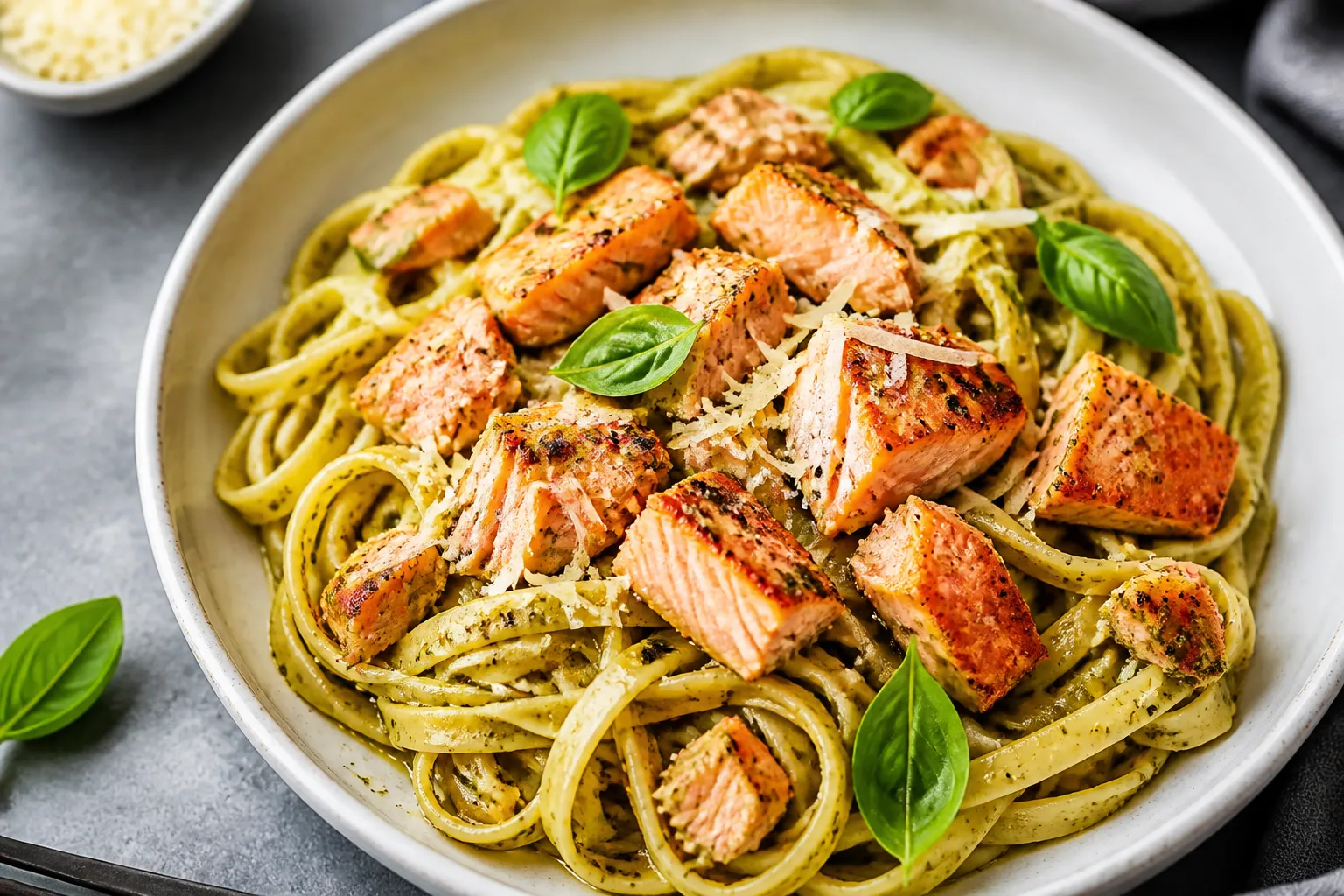
Salmon Pesto Pasta – A Bright, Comforting Weeknight Dinner
This salmon pesto pasta hits the sweet spot between fresh and cozy. It’s rich without being heavy, and it comes together fast enough for a busy weeknight. The tender flakes of salmon soak up a garlicky, herby pesto, while al dente pasta carries all that flavor in every bite.
Add a squeeze of lemon, a handful of peas or tomatoes, and dinner feels special with almost no fuss. If you love meals that taste restaurant-quality but use everyday ingredients, this one’s for you.
Why This Recipe Works
- Balanced flavors: The richness of salmon pairs naturally with basil pesto’s brightness. Lemon and a touch of chili bring it to life.
- Speed and simplicity: Cooking the salmon and boiling the pasta happen at the same time.
You’ll be eating in about 25 minutes.
- Great texture: Flaky salmon, glossy pesto, and a splash of pasta water create a silky sauce that clings to the noodles.
- Flexible and forgiving: Fresh or jarred pesto both work. You can swap pasta shapes and add quick vegetables without changing the core method.
- Nutritious without trying: Omega-3s from salmon, good fats from olive oil and nuts in pesto, and fiber from whole-grain pasta if you choose it.
What You’ll Need
- Pasta: 12 ounces short pasta (penne, fusilli, or farfalle) or long pasta (linguine). Choose what you like.
- Salmon: 12–16 ounces skinless salmon fillet, cut into 1-inch pieces, or cook as a whole fillet and flake.
- Pesto: 1/2 cup good-quality basil pesto (store-bought or homemade), plus extra to taste.
- Lemon: Zest and juice of 1/2 to 1 lemon for brightness.
- Olive oil: 1–2 tablespoons for cooking and finishing.
- Garlic (optional): 1 small clove, finely grated, if your pesto isn’t very garlicky.
- Chili flakes (optional): A pinch for gentle heat.
- Pasta water: 1/2–3/4 cup reserved to loosen the sauce.
- Parmesan: Freshly grated, for serving.
- Veg add-ins (optional): 1 cup peas (frozen is fine), cherry tomatoes, or baby spinach.
- Salt and pepper: To season pasta water and salmon.
How to Make It
- Boil the pasta: Bring a large pot of well-salted water to a rolling boil.
Cook the pasta until just shy of al dente. Reserve 3/4 cup pasta water before draining.
- Prep the salmon: Pat the salmon dry. Season with salt, pepper, and a light drizzle of olive oil. If using a whole fillet, leave it intact for easier cooking.
- Sear or bake the salmon:
- Stovetop: Heat a nonstick skillet with 1 tablespoon olive oil over medium-high.
Cook salmon pieces 2–3 minutes per side until just opaque. For a whole fillet, cook 3–4 minutes per side.
- Oven: Bake at 400°F (205°C) for 10–12 minutes, depending on thickness, until just cooked.
Let it rest a minute, then flake into large chunks.
- Stovetop: Heat a nonstick skillet with 1 tablespoon olive oil over medium-high.
- Warm the pesto base: In a large skillet on low heat, add pesto with a splash of pasta water. If using, add grated garlic and a pinch of chili.
Stir until glossy but don’t let it simmer hard.
- Add pasta and loosen: Tip in the drained pasta. Toss with tongs, adding pasta water a little at a time until the sauce coats the noodles and looks silky.
- Fold in salmon and extras: Gently add the salmon so it stays in big flakes. If using peas, stir them in now (no need to pre-cook if frozen; the heat will thaw them).
Cherry tomatoes or spinach can go in here, too.
- Finish with lemon: Add lemon zest and a squeeze of juice. Taste and adjust salt, pepper, and pesto as needed. A drizzle of olive oil adds shine.
- Serve: Top with grated Parmesan and more chili flakes if you like.
Serve warm with lemon wedges.
Keeping It Fresh
- Store: Refrigerate leftovers in an airtight container for up to 2 days. The pasta will absorb sauce, so expect a thicker texture.
- Reheat gently: Warm on the stovetop over low heat with a splash of water or broth. Avoid high heat to keep the salmon tender.
- Add freshness back: Stir in extra pesto or a squeeze of lemon after reheating to revive aroma and color.
- Avoid freezing: Cooked pasta and pesto don’t freeze well together, and salmon can turn mushy when thawed.
Health Benefits
- Heart-healthy fats: Salmon is rich in omega-3s (EPA and DHA), which support heart and brain health and help reduce inflammation.
- Protein and satiety: Salmon provides high-quality protein that keeps you full and supports muscle maintenance.
- Nutrient-dense sauce: Pesto brings vitamin K from basil, plus vitamin E and healthy monounsaturated fats from olive oil and nuts.
- Fiber options: Using whole-grain pasta boosts fiber, which supports digestion and stable energy.
- Balanced meal: Carbs, protein, and fats come together for steady, satisfying fuel.
Common Mistakes to Avoid
- Overcooking the salmon: Pull it as soon as it turns opaque and flakes.
It keeps cooking off-heat.
- Boiling the pesto: High heat dulls the basil and can make the sauce oily. Keep it gentle.
- Skipping pasta water: It’s the secret to a glossy, cohesive sauce. Add it gradually to control texture.
- Underseasoned pasta water: Salt the water so the pasta tastes good before it meets the sauce.
- Breaking the salmon too much: Fold it in at the end and stir lightly to keep hearty flakes.
Recipe Variations
- Creamy pesto twist: Stir in 2–3 tablespoons of heavy cream, crème fraîche, or Greek yogurt for a velvety finish.
- Herb swap: Use arugula or kale pesto for a peppery, deeper green flavor.
- Citrus-forward: Add more lemon zest and a splash of lemon-infused olive oil for extra brightness.
- Veggie boost: Toss in blanched asparagus tips, sautéed zucchini, roasted cherry tomatoes, or ribbons of baby spinach.
- Nut-free pesto: Make or buy a nut-free version using pumpkin seeds or omit nuts altogether.
- Grilled salmon: Grill the salmon for a light smoky note and flake it into the pasta at the end.
- Spicy kick: Add Calabrian chili paste or a pinch of red pepper flakes to the pesto base.
- Gluten-free: Use your favorite gluten-free pasta and watch the cook time closely for best texture.
FAQ
Can I use canned salmon?
Yes.
Choose boneless, skinless canned salmon packed in water. Drain well, flake gently, and fold it in at the end to warm through. Fresh salmon gives a more delicate texture, but canned is convenient and still tasty.
What pasta shape works best?
Short shapes like fusilli or penne catch pesto in their curves, while linguine creates a silky twirl.
Both work well. Use what you have and what you like.
Do I need to remove salmon skin?
If pan-searing, skin-on is fine; you can cook it skin-side down first and peel it off after. For baking or poaching, skinless is simpler.
Either way, avoid overcooking.
How do I make it dairy-free?
Use a dairy-free pesto or make your own with nutritional yeast instead of Parmesan. Skip the cheese garnish or use a dairy-free alternative.
Can I make it ahead?
You can cook the salmon and prep pesto in advance, but cook the pasta right before serving. Combine everything at the last minute with warm pasta water for the best texture.
How much lemon should I use?
Start with the zest and the juice of half a lemon, then taste.
Add more juice if the dish tastes flat. The goal is bright, not sour.
What if my pesto is too thick or too oily?
Thin with warm pasta water a tablespoon at a time until glossy. If oily, lower the heat and keep stirring gently; avoid simmering to prevent separation.
Can I use frozen salmon?
Absolutely.
Thaw it overnight in the fridge or under cold running water. Pat dry very well before cooking to get good browning and clean flakes.
Final Thoughts
Salmon pesto pasta is the kind of meal that feels effortless yet impressive. With a few good ingredients and a couple of smart steps, you get bright, savory flavors in under half an hour.
Keep the heat gentle, save your pasta water, and finish with lemon. Once you’ve got that down, you can swap veggies, change the pasta, or make it creamy—whatever fits your mood. It’s a reliable, feel-good dinner you’ll come back to again and again.