Thanksgiving Mashed Potatos – Creamy, Comforting, and Crowd-Pleasing
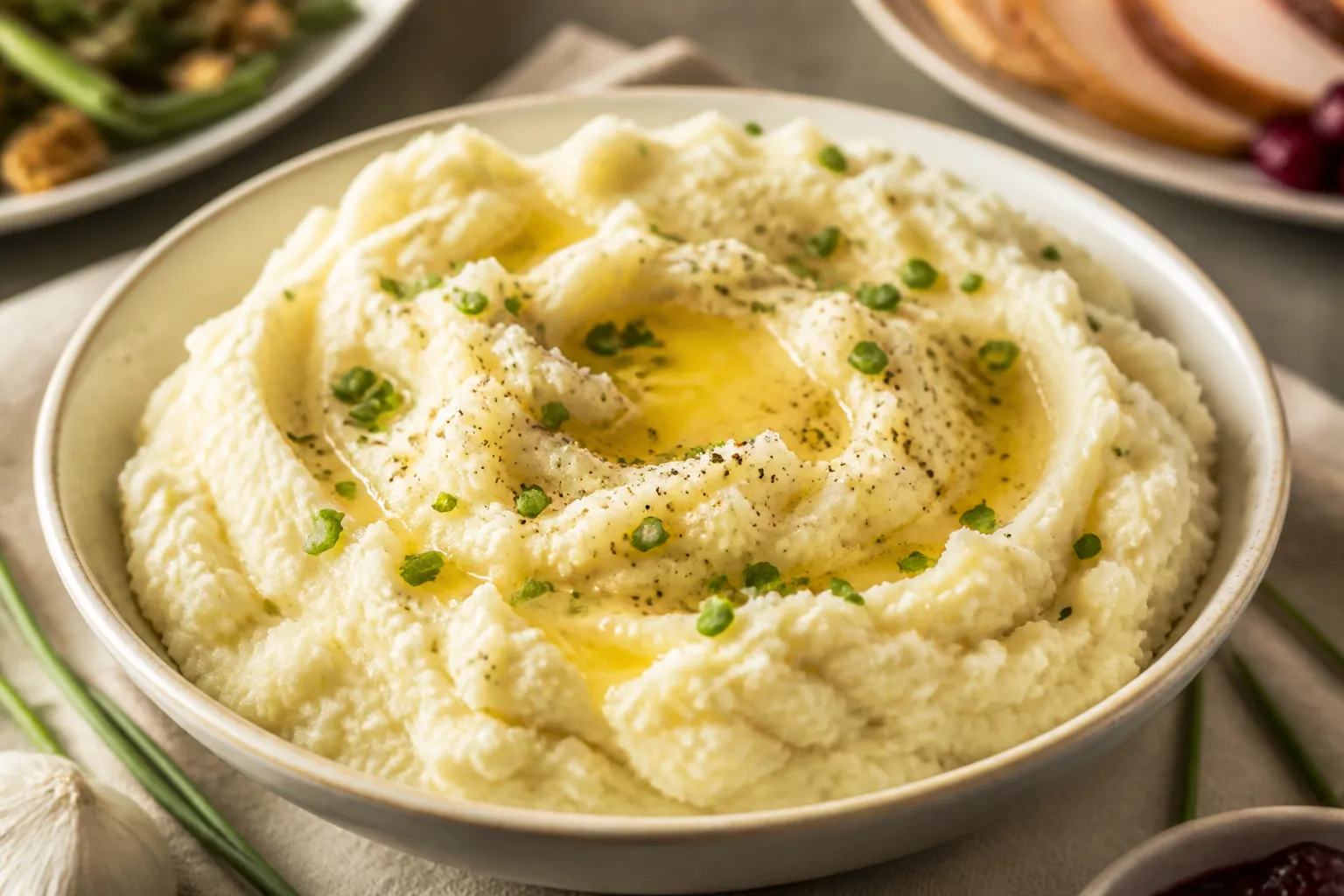
Mashed potatoes are the heart and soul of a Thanksgiving table. They’re warm, buttery, and comforting in a way no other side can match. This version is rich and silky, with the perfect balance of creaminess and flavor.
It’s the kind of mash that makes gravy optional and seconds inevitable. Whether you’re feeding a crowd or keeping things cozy, these mashed potatoes deliver every single time.

What Makes This Recipe So Good

These mashed potatoes are all about smooth texture and big flavor. The secret is a mix of butter and warm dairy for that lush, velvety finish.
We also season in layers, so every bite tastes just right, not bland. And because timing is everything on Thanksgiving, this recipe includes make-ahead tips that won’t sacrifice freshness.
- Ultra-creamy texture: Russet and Yukon Gold potatoes combine for a light yet buttery mash.
- Full, balanced flavor: Salted water, butter, and a touch of sour cream deliver depth without overpowering the potatoes.
- Reliable process: Simple steps, no guesswork, and easy to scale for any crowd size.
- Make-ahead friendly: Stays smooth when reheated the right way.
What You’ll Need
- 3 pounds potatoes (half Russet, half Yukon Gold is ideal)
- 1 tablespoon kosher salt (for boiling water), plus more to taste
- 8 tablespoons (1 stick) unsalted butter, room temperature and cut into pieces
- 3/4 to 1 cup whole milk, warmed
- 1/2 cup sour cream (or crème fraîche)
- Freshly ground black pepper, to taste
- Optional: 1–2 garlic cloves, smashed; 2–3 green onions, thinly sliced; chopped fresh chives; a splash of heavy cream for extra richness
How to Make It

- Prep the potatoes: Peel the potatoes and cut them into evenly sized chunks, about 1 1/2 inches. Rinse under cold water to remove excess starch.
- Start in cold, salted water: Place potatoes in a large pot and cover with cold water by about an inch.
Add 1 tablespoon kosher salt. Starting cold helps them cook evenly.
- Cook until tender: Bring to a gentle boil, then reduce to a lively simmer. Cook 15–20 minutes, or until a fork slides in easily without resistance.
- Warm the dairy: In a small saucepan, gently heat the milk (and heavy cream, if using) until warm but not boiling.
Keep the butter at room temperature or slightly melted.
- Drain well: Drain the potatoes thoroughly, then return them to the hot pot. Set over low heat for 1–2 minutes, stirring occasionally, to steam off excess moisture.
- Mash your way: Use a potato ricer for the smoothest texture, or a masher for a rustic finish. Avoid a food processor or blender, which makes gluey potatoes.
- Add butter first: Fold in the butter until fully absorbed.
This step coats the starches and creates a silkier texture.
- Stream in warm milk: Add warm milk a little at a time, stirring gently, until you reach your desired creaminess.
- Finish with sour cream and seasoning: Stir in sour cream. Season with salt and black pepper to taste. Add chives or green onions if you like.
- Serve warm: Transfer to a warm serving dish, dot with a little extra butter, and keep covered until mealtime.
Storage Instructions
- Refrigerate: Cool completely, then store in an airtight container for up to 4 days.
- Freeze: Freeze up to 1 month.
For best texture, add a splash of cream or milk when reheating.
- Reheat on stovetop: Warm over low heat with a bit of milk or cream, stirring gently until smooth.
- Oven reheat: Spread in a baking dish, cover with foil, and warm at 300°F (150°C) for 20–30 minutes, stirring once and adding a splash of milk if needed.
- Slow cooker hold: On “Warm,” stir in a little milk and butter, cover, and hold for up to 2 hours, stirring occasionally.
Benefits of This Recipe
- Comfort classic: Familiar flavors that everyone loves, no matter their age.
- Flexible texture: Easy to make silky-smooth or pleasantly rustic.
- Make-ahead friendly: Saves stove space and stress on a busy holiday.
- Budget-conscious: Simple ingredients with big payoff.
- Pairs with everything: Turkey, gravy, roasted veggies, and beyond.
Pitfalls to Watch Out For
- Gluey potatoes: Overworking the potatoes or using a blender/processor can make them gummy. Mash gently and stop when smooth.
- Waterlogged texture: Not draining well or skipping the “steam-off” step leaves excess moisture. Dry them briefly over low heat.
- Bland results: Under-salting the water leads to flat flavor.
Season the water generously and taste as you go.
- Cold dairy shock: Cold milk cools the potatoes and tightens starches. Always add warm milk and room-temp butter.
- Uneven cooking: Tossing potatoes into boiling water cooks the outside faster than the inside. Start with cold water.
Recipe Variations
- Garlic-Parmesan: Simmer smashed garlic in the milk, strain, then mix in 1/2 cup finely grated Parmesan.
- Brown Butter and Chive: Brown the butter until nutty and stir it in with a handful of chopped chives.
- Roasted Garlic: Fold in a whole head of roasted garlic for sweet, mellow depth.
- Herbed Crème Fraîche: Swap sour cream for crème fraîche and add thyme and parsley.
- Extra-Rich Holiday Mash: Use half-and-half or add cream cheese (2–4 ounces) for plush, bakery-style potatoes.
- Dairy-Free: Use olive oil or dairy-free butter and warm unsweetened almond or oat milk; season generously.
FAQ
What are the best potatoes for mashed potatoes?
A mix of Russet and Yukon Gold gives you the best of both worlds: Russets keep things light and fluffy, while Yukons add buttery flavor and a naturally creamy texture.
Can I make these ahead of time?
Yes.
Make them up to two days in advance, cool, and refrigerate. Reheat gently with a splash of warm milk and a pat of butter to bring back the silky texture.
How do I keep mashed potatoes warm for dinner?
Use a slow cooker on “Warm,” or place the bowl over a pot of barely simmering water. Stir occasionally and add a bit of milk if needed to keep them smooth.
Why did my mashed potatoes turn gluey?
They were likely overmixed or processed with a blender.
Mash by hand or use a ricer, and add liquids gradually while stirring gently.
Do I need to peel the potatoes?
Peeling makes a smoother mash, but you can leave skins on for a rustic texture, especially with Yukon Golds. Just scrub well and cut evenly.
Can I use half-and-half instead of milk?
Absolutely. Half-and-half or even a splash of heavy cream will make the potatoes richer.
Warm it before adding for the best texture.
How much salt should I add overall?
Salt the cooking water generously, then taste and adjust after adding butter and dairy. Start with 1 teaspoon of kosher salt post-mash and add more as needed.
In Conclusion
Thanksgiving Mashed Potatoes should be creamy, flavorful, and reliable. With the right potatoes, warm dairy, and a gentle touch, you’ll get a silky mash that holds its own alongside turkey and gravy.
Make them ahead, keep them warm, and serve with confidence. This simple, classic recipe brings comfort and joy to the table every time.
Thanksgiving Mashed Potatos - Creamy, Comforting, and Crowd-Pleasing
Ingredients
- 3 pounds potatoes (half Russet, half Yukon Gold is ideal)
- 1 tablespoon kosher salt (for boiling water), plus more to taste
- 8 tablespoons (1 stick) unsalted butter, room temperature and cut into pieces
- 3/4 to 1 cup whole milk, warmed
- 1/2 cup sour cream (or crème fraîche)
- Freshly ground black pepper, to taste
- Optional: 1–2 garlic cloves, smashed; 2–3 green onions, thinly sliced; chopped fresh chives; a splash of heavy cream for extra richness
Method
- Prep the potatoes: Peel the potatoes and cut them into evenly sized chunks, about 1 1/2 inches. Rinse under cold water to remove excess starch.
- Start in cold, salted water: Place potatoes in a large pot and cover with cold water by about an inch. Add 1 tablespoon kosher salt. Starting cold helps them cook evenly.
- Cook until tender: Bring to a gentle boil, then reduce to a lively simmer. Cook 15–20 minutes, or until a fork slides in easily without resistance.
- Warm the dairy: In a small saucepan, gently heat the milk (and heavy cream, if using) until warm but not boiling. Keep the butter at room temperature or slightly melted.
- Drain well: Drain the potatoes thoroughly, then return them to the hot pot. Set over low heat for 1–2 minutes, stirring occasionally, to steam off excess moisture.
- Mash your way: Use a potato ricer for the smoothest texture, or a masher for a rustic finish. Avoid a food processor or blender, which makes gluey potatoes.
- Add butter first: Fold in the butter until fully absorbed. This step coats the starches and creates a silkier texture.
- Stream in warm milk: Add warm milk a little at a time, stirring gently, until you reach your desired creaminess.
- Finish with sour cream and seasoning: Stir in sour cream. Season with salt and black pepper to taste. Add chives or green onions if you like.
- Serve warm: Transfer to a warm serving dish, dot with a little extra butter, and keep covered until mealtime.
Notes
- Refrigerate: Cool completely, then store in an airtight container for up to 4 days.
- Freeze: Freeze up to 1 month. For best texture, add a splash of cream or milk when reheating.
- Reheat on stovetop: Warm over low heat with a bit of milk or cream, stirring gently until smooth.
- Oven reheat: Spread in a baking dish, cover with foil, and warm at 300°F (150°C) for 20–30 minutes, stirring once and adding a splash of milk if needed.
- Slow cooker hold: On “Warm,” stir in a little milk and butter, cover, and hold for up to 2 hours, stirring occasionally.
Let us know how it was! ♡

2 Comments