Thanksgiving Stuffing – A Cozy, Flavor-Packed Classic
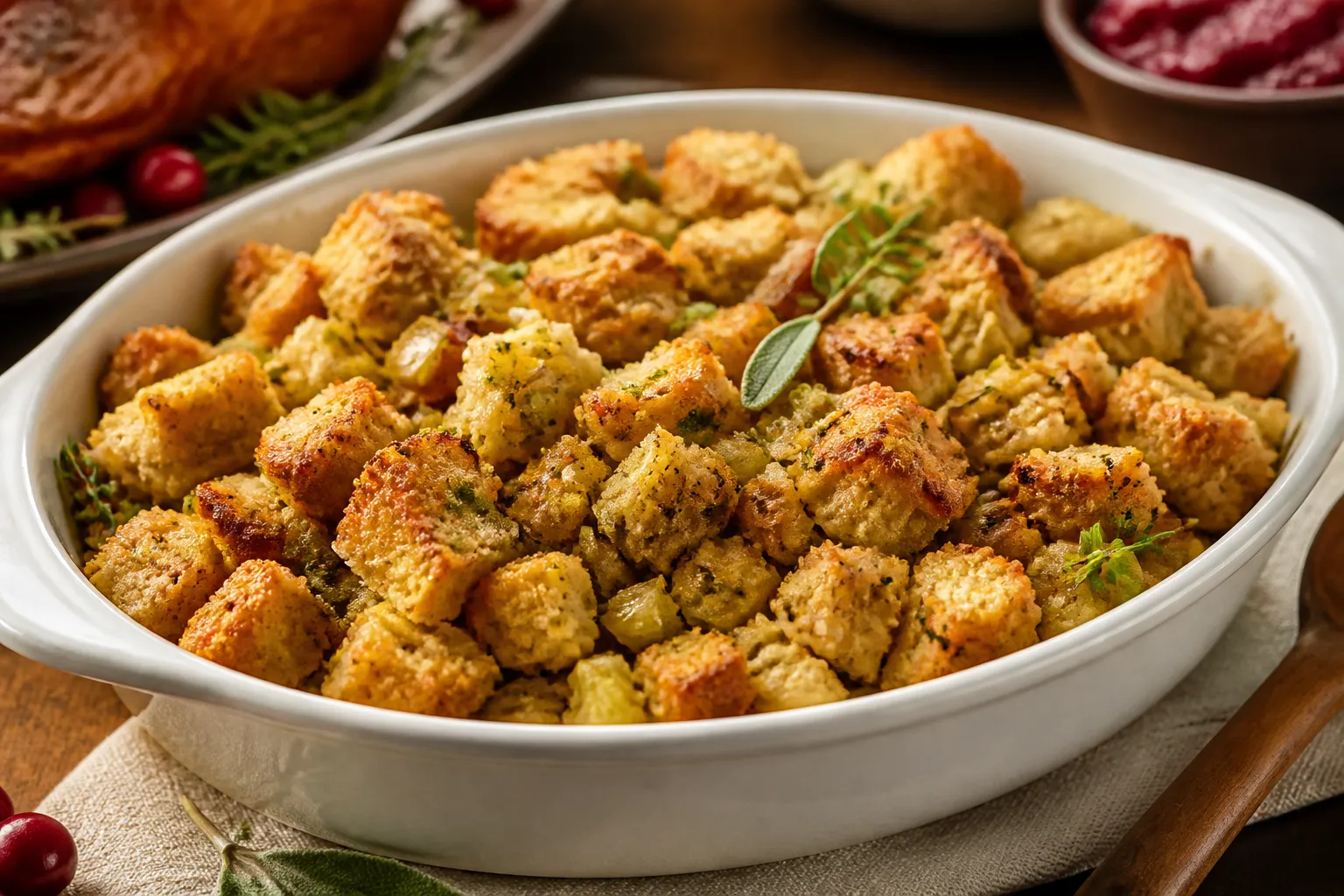
Thanksgiving stuffing is the kind of dish that brings a hush over the table. It’s warm, savory, and full of nostalgic flavors that feel like home. Whether you call it stuffing or dressing, the idea is the same: tender bread, aromatic herbs, rich stock, and just enough butter to make it irresistible.
This version keeps things traditional while offering a few thoughtful upgrades. It’s easy to make ahead, simple to customize, and guaranteed to be the first casserole dish to empty.
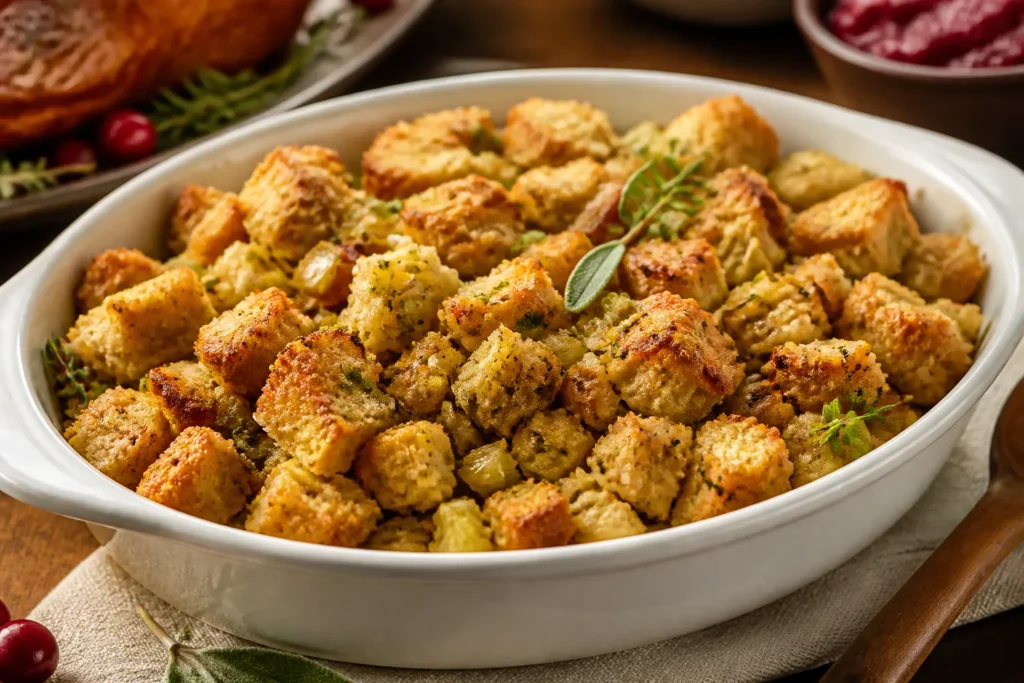
What Makes This Special
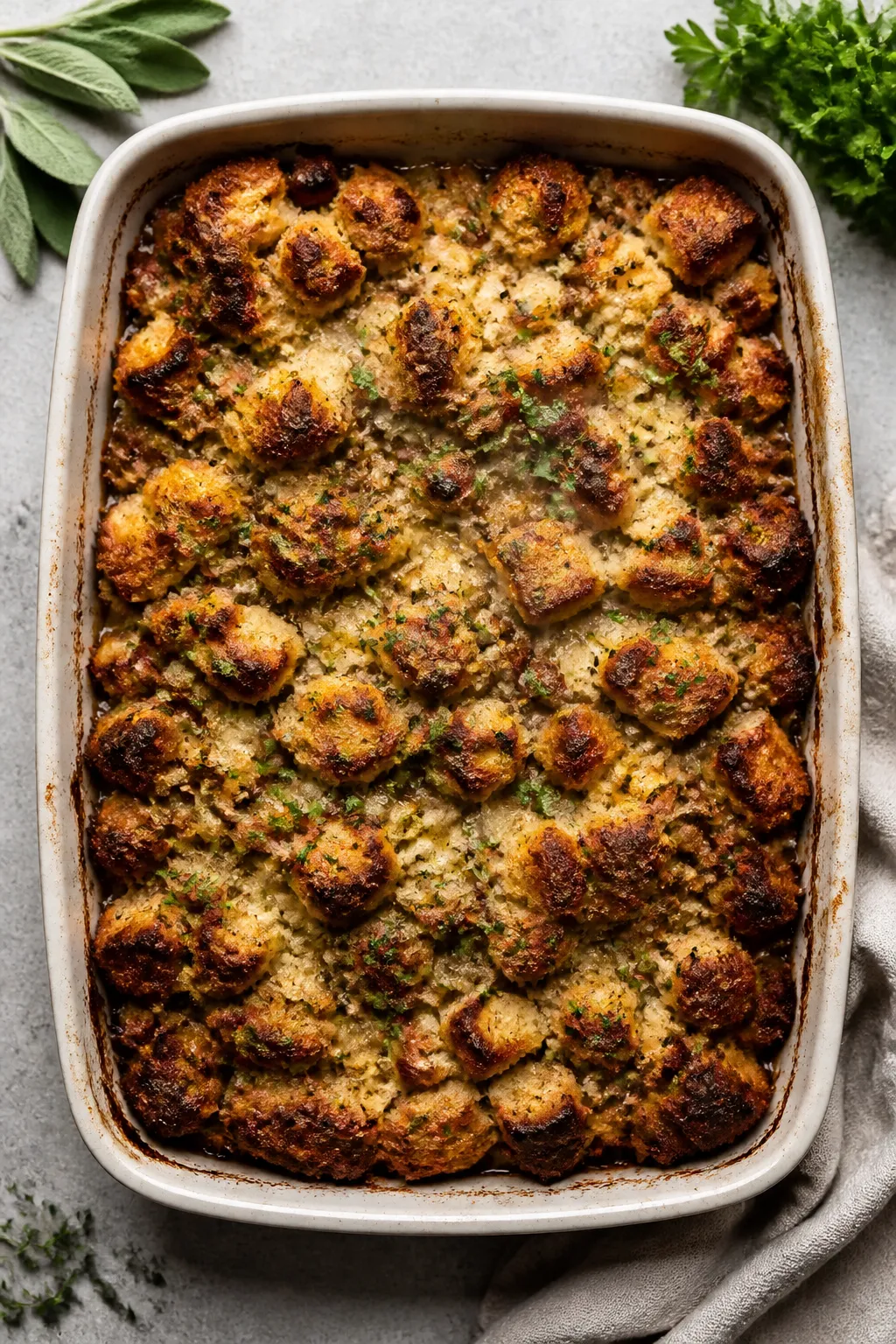
This stuffing leans on a classic combination: toasted bread, onions, celery, fresh herbs, and a hint of sausage for depth. The texture hits that sweet spot—soft and custardy in the middle with crisp, golden edges.
It’s also flexible. You can make it with chicken or turkey stock, use day-old bread or packaged cubes, add apples or mushrooms, or leave it totally meatless. It’s designed to work with your schedule and your crowd.
- Balanced texture: A mix of torn and cubed bread creates both fluffy and crunchy bites.
- Layered flavor: Fresh sage, thyme, and parsley give a fragrant, holiday feel without overwhelming the palate.
- Make-ahead friendly: Assemble the day before and bake before serving.
- Customizable: Works with gluten-free bread, vegetable stock, or plant-based butter if needed.
What You’ll Need
- Bread: 1 to 1.25 pounds (about 12–14 cups) of day-old bread, cut or torn into 1-inch pieces.
Sourdough, country white, or French bread are great.
- Unsalted butter: 8 tablespoons (1 stick), plus more for greasing the dish.
- Olive oil: 1–2 tablespoons for sautéing (optional if you want a butter-only version).
- Yellow onion: 2 medium, finely chopped.
- Celery: 4–5 ribs, finely chopped.
- Garlic: 3 cloves, minced.
- Fresh herbs: 2 tablespoons chopped fresh sage, 1 tablespoon chopped fresh thyme, 2 tablespoons chopped parsley (plus extra for garnish).
- Sausage (optional): 1 pound mild Italian or breakfast sausage, casings removed.
- Eggs: 2 large, lightly beaten.
- Stock or broth: 3 to 4 cups turkey or chicken stock (use vegetable stock for a vegetarian version), warmed.
- Salt and pepper: To taste (start with 1.5 teaspoons kosher salt and 1 teaspoon black pepper, then adjust).
- Poultry seasoning (optional): 1 teaspoon for extra classic flavor.
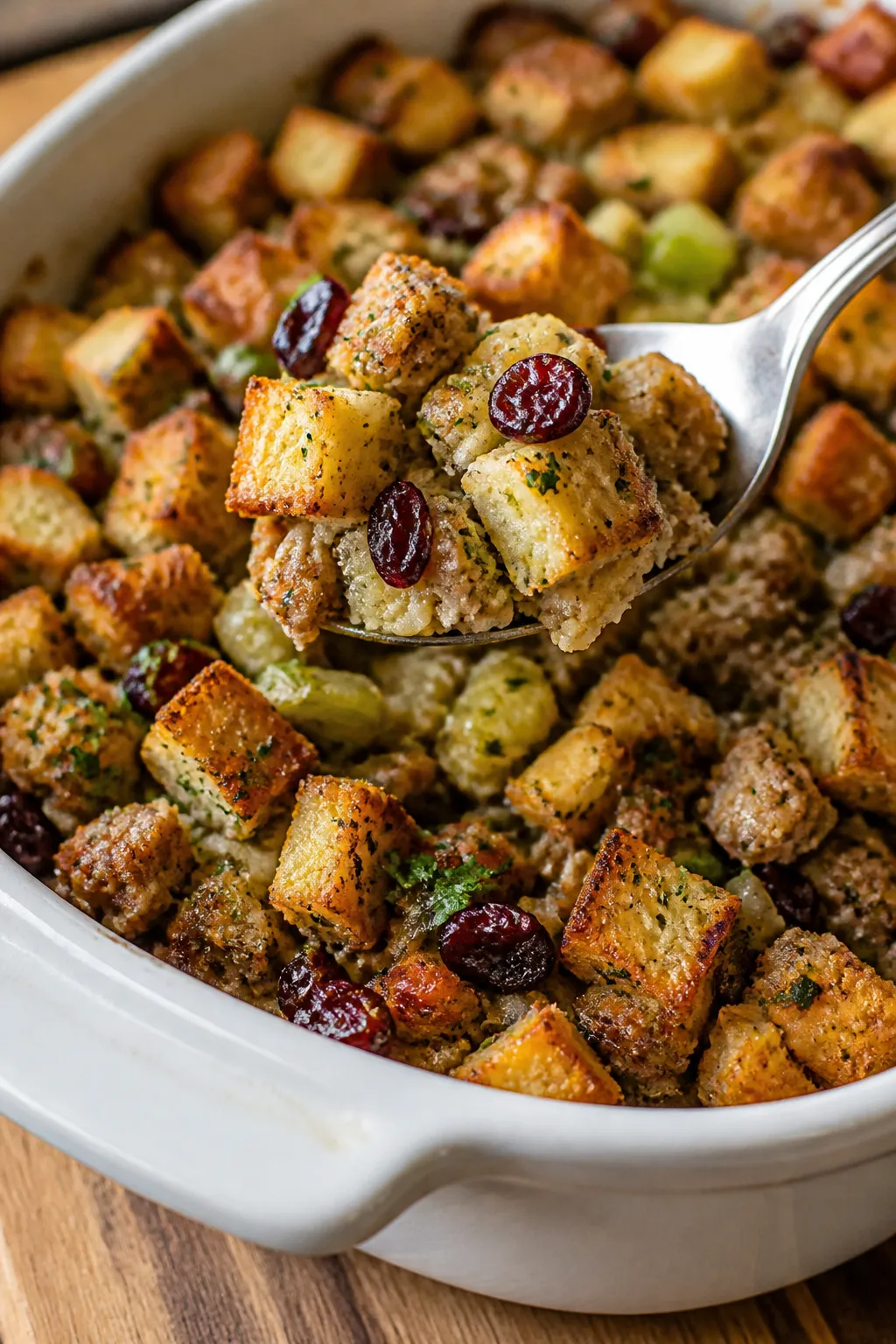
- Dried fruit or extras (optional): 1/2 cup dried cranberries, chopped apples, or toasted pecans.
Step-by-Step Instructions
- Dry the bread: If your bread isn’t day-old, spread the cubes on baking sheets and bake at 300°F (150°C) for 20–30 minutes, stirring occasionally, until dry but not browned. Cool completely.
- Prep the pan: Butter a 9×13-inch baking dish (or similar). Set aside.
- Cook the sausage (if using): In a large skillet over medium heat, cook the sausage, breaking it up with a spoon, until browned and cooked through.
Transfer to a plate lined with paper towels.
- Sauté the aromatics: In the same skillet, melt the butter (add a splash of olive oil if you like). Add onion and celery with a pinch of salt. Cook over medium heat until soft and translucent, 10–12 minutes.
Stir in garlic, sage, thyme, and poultry seasoning. Cook 1–2 minutes until fragrant.
- Combine the base: In a very large bowl, add the dried bread. Pour the onion–celery mixture over the bread.
Add the sausage, parsley, and any optional add-ins like cranberries or apples. Toss gently to combine.
- Moisten the mixture: Whisk the eggs with 3 cups of warm stock. Pour over the bread mixture and gently toss until evenly moistened.
The bread should be soft but not soggy. Add up to 1 more cup stock as needed. Taste and adjust salt and pepper.
- Rest and absorb: Let the mixture sit for 10 minutes so the bread absorbs the liquid. If it looks dry, add a little more stock.
- Fill the dish: Transfer to the prepared baking dish.
Dot the top with small pieces of butter for extra browning.
- Bake covered: Cover tightly with foil and bake at 350°F (175°C) for 30 minutes.
- Finish uncovered: Remove foil and bake another 25–35 minutes, until the top is golden and crisp and the center is hot. If you like extra-crispy edges, broil for 1–2 minutes at the end, watching closely.
- Rest and serve: Let it sit 10 minutes before serving. Sprinkle with fresh parsley.
Storage Instructions
- Refrigerator: Cool completely, cover tightly, and store up to 4 days.
- Freezer: Wrap in layers (plastic wrap, then foil) and freeze up to 2 months.
Thaw in the fridge overnight.
- Reheating: Warm covered at 325°F (165°C) for 20–30 minutes. Add a splash of stock and a pat of butter if it seems dry. For crisp edges, uncover for the last 5–10 minutes.
- Make-ahead: Assemble (without baking), cover, and refrigerate up to 24 hours.
Add 5–10 extra minutes to the bake time.
Why This is Good for You
Stuffing is comfort food, but it can still bring some balance to the table. The aromatics—onion, celery, garlic, and herbs—are full of flavor, so you need less salt to make it taste great. Using quality stock adds protein and minerals, and whole-grain or sourdough bread offers more fiber and structure.
You can also add mushrooms, nuts, or apples for extra nutrients and texture without losing that classic, cozy vibe.
What Not to Do
- Don’t skip drying the bread: If the bread isn’t dry, the stuffing turns gummy instead of tender.
- Don’t drown it in stock: Add liquid gradually. The mixture should be moist but not soupy.
- Don’t overpack the dish: Crowding prevents crisp edges. Use a larger dish or two smaller ones if needed.
- Don’t bake it straight from the fridge: If you assembled ahead, let it sit at room temperature for 20–30 minutes to promote even heating.
- Don’t rely only on dried herbs: A little poultry seasoning is fine, but fresh sage and thyme make a big difference.
Alternatives
- Vegetarian: Skip the sausage and use vegetable stock.
Add sautéed mushrooms for umami.
- Gluten-free: Use your favorite gluten-free bread and check that the stock is gluten-free.
- Dairy-free: Use olive oil or a plant-based butter. Check sausage and stock labels for hidden dairy.
- Apple and pecan: Stir in 1 cup chopped apples and 1/2 cup toasted pecans for sweet-crunchy notes.
- Cornbread stuffing: Replace half or all of the bread with dried cornbread for a Southern touch. Reduce added salt slightly.
- Mushroom and leek: Swap onions for leeks and add 12 ounces sautéed mushrooms for a woodsy, savory flavor.
FAQ
Can I stuff this inside the turkey?
It’s safer and more reliable to bake stuffing in a separate dish.
If you choose to stuff the turkey, make sure the center of the stuffing reaches 165°F. Keep in mind the bird will take longer to cook, and the stuffing may end up denser.
What’s the best bread to use?
A sturdy loaf like sourdough, country white, or French bread works best. Avoid very soft sandwich bread unless you dry it thoroughly; it tends to get mushy.
A mix of breads can add complexity.
How do I fix stuffing that’s too dry?
Sprinkle with warm stock, dot with butter, and return to the oven covered for 10–15 minutes. Uncover at the end if you want the top to re-crisp.
How do I fix stuffing that’s too wet?
Spread it out in a larger baking dish to increase surface area and bake uncovered until excess moisture evaporates. Broiling briefly can help crisp the top, but watch closely.
Can I make it egg-free?
Yes.
Eggs help bind and add richness, but you can leave them out and rely on stock and butter. Bake covered a bit longer to set the center.
Do I need both butter and oil?
No, but a mix can help prevent burning while still adding buttery flavor. If using only butter, keep the heat moderate when sautéing.
What herbs can I swap if I don’t have sage and thyme?
Rosemary and marjoram can step in, but use rosemary sparingly because it’s strong.
Dried herbs work in a pinch; use about one-third the amount of fresh.
How can I add more flavor without sausage?
Brown mushrooms well for extra umami, use a richer stock, and add a splash of Worcestershire or soy sauce (gluten-free if needed). A little white wine reduced with the onions also adds depth.
In Conclusion
This Thanksgiving stuffing balances comfort and craft, delivering big flavor with simple steps. It’s the kind of recipe that plays well with a busy holiday kitchen: make-ahead friendly, customizable, and consistently crowd-pleasing.
With golden edges, a tender center, and that unmistakable herb aroma, it earns its place next to the turkey every time. Keep it classic or make it your own—either way, it will taste like tradition done right.
Thanksgiving Stuffing - A Cozy, Flavor-Packed Classic
Ingredients
- Bread: 1 to 1.25 pounds (about 12–14 cups) of day-old bread, cut or torn into 1-inch pieces. Sourdough, country white, or French bread are great.
- Unsalted butter: 8 tablespoons (1 stick), plus more for greasing the dish.
- Olive oil: 1–2 tablespoons for sautéing (optional if you want a butter-only version).
- Yellow onion: 2 medium, finely chopped.
- Celery: 4–5 ribs, finely chopped.
- Garlic: 3 cloves, minced.
- Fresh herbs: 2 tablespoons chopped fresh sage, 1 tablespoon chopped fresh thyme, 2 tablespoons chopped parsley (plus extra for garnish).
- Sausage (optional): 1 pound mild Italian or breakfast sausage, casings removed.
- Eggs: 2 large, lightly beaten.
- Stock or broth: 3 to 4 cups turkey or chicken stock (use vegetable stock for a vegetarian version), warmed.
- Salt and pepper: To taste (start with 1.5 teaspoons kosher salt and 1 teaspoon black pepper, then adjust).
- Poultry seasoning (optional): 1 teaspoon for extra classic flavor.
- Dried fruit or extras (optional): 1/2 cup dried cranberries, chopped apples, or toasted pecans.
Method
- Dry the bread: If your bread isn’t day-old, spread the cubes on baking sheets and bake at 300°F (150°C) for 20–30 minutes, stirring occasionally, until dry but not browned. Cool completely.
- Prep the pan: Butter a 9x13-inch baking dish (or similar). Set aside.
- Cook the sausage (if using): In a large skillet over medium heat, cook the sausage, breaking it up with a spoon, until browned and cooked through. Transfer to a plate lined with paper towels.
- Sauté the aromatics: In the same skillet, melt the butter (add a splash of olive oil if you like). Add onion and celery with a pinch of salt. Cook over medium heat until soft and translucent, 10–12 minutes. Stir in garlic, sage, thyme, and poultry seasoning. Cook 1–2 minutes until fragrant.
- Combine the base: In a very large bowl, add the dried bread. Pour the onion–celery mixture over the bread. Add the sausage, parsley, and any optional add-ins like cranberries or apples. Toss gently to combine.
- Moisten the mixture: Whisk the eggs with 3 cups of warm stock. Pour over the bread mixture and gently toss until evenly moistened. The bread should be soft but not soggy. Add up to 1 more cup stock as needed. Taste and adjust salt and pepper.
- Rest and absorb: Let the mixture sit for 10 minutes so the bread absorbs the liquid. If it looks dry, add a little more stock.
- Fill the dish: Transfer to the prepared baking dish. Dot the top with small pieces of butter for extra browning.
- Bake covered: Cover tightly with foil and bake at 350°F (175°C) for 30 minutes.
- Finish uncovered: Remove foil and bake another 25–35 minutes, until the top is golden and crisp and the center is hot. If you like extra-crispy edges, broil for 1–2 minutes at the end, watching closely.
- Rest and serve: Let it sit 10 minutes before serving. Sprinkle with fresh parsley.
Notes
- Refrigerator: Cool completely, cover tightly, and store up to 4 days.
- Freezer: Wrap in layers (plastic wrap, then foil) and freeze up to 2 months. Thaw in the fridge overnight.
- Reheating: Warm covered at 325°F (165°C) for 20–30 minutes. Add a splash of stock and a pat of butter if it seems dry. For crisp edges, uncover for the last 5–10 minutes.
- Make-ahead: Assemble (without baking), cover, and refrigerate up to 24 hours. Add 5–10 extra minutes to the bake time.
Let us know how it was! ♡