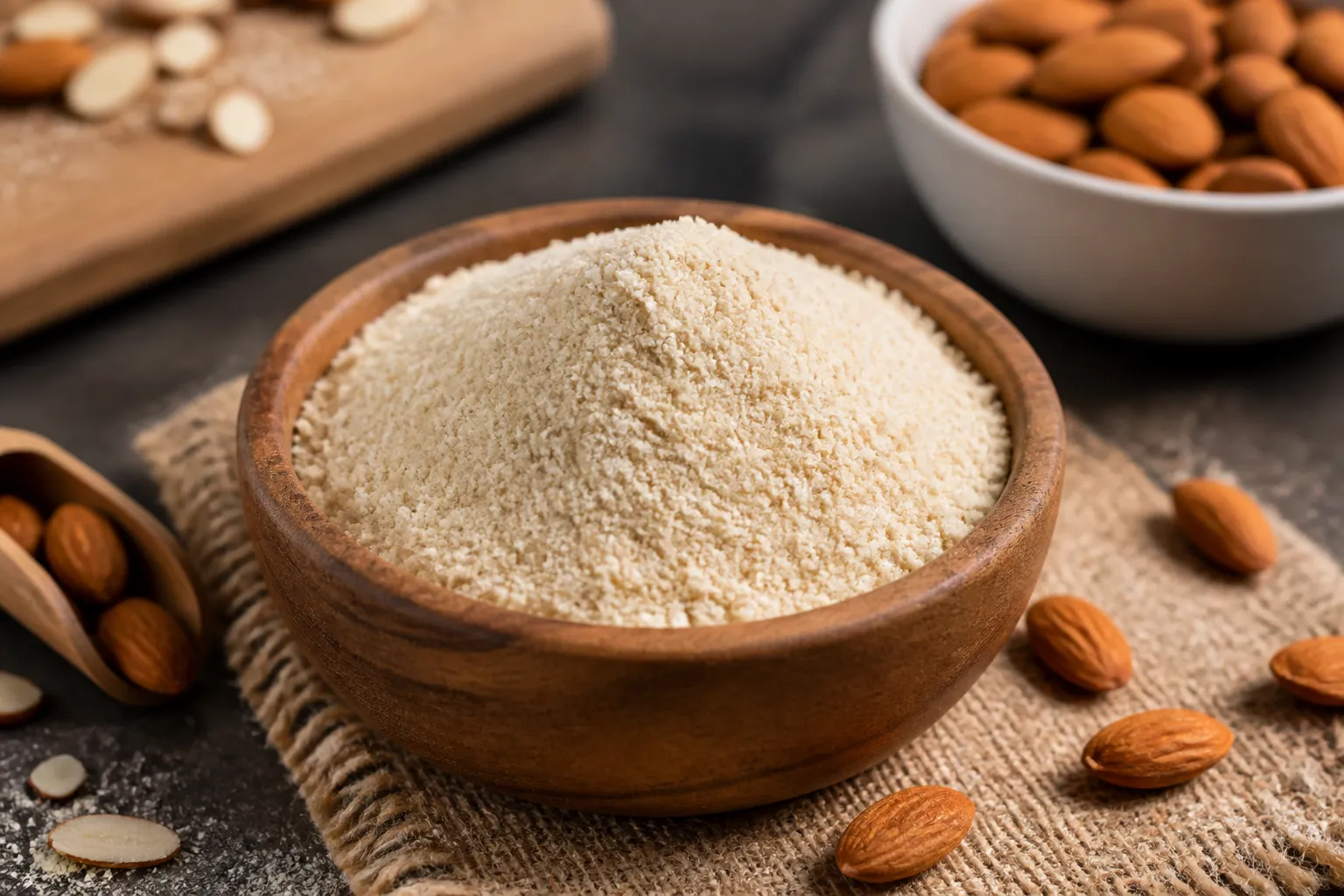
Choose your almonds: For classic almond flour, use blanched almonds.
Skins add color and fiber but create almond meal, which is coarser.
Dry the almonds: Make sure they’re completely dry. Any moisture causes clumping and can lead to a paste.
Pulse, don’t blend continuously: Add almonds to a high-speed blender or food processor. Pulse in short bursts, stopping to scrape down the sides as needed.
Watch the texture: Aim for a fine, sandy consistency.
If you go too long, the oils release and you’ll get almond butter.
Sift for uniformity: Pass the flour through a fine-mesh sieve. Return larger pieces to the blender and pulse again.
Weigh for accuracy: If a recipe is precise, measure by weight. Almond flour is lighter than wheat flour, and scooping can compact it.
Store properly: Transfer to an airtight container.
Keep it cool and out of sunlight to maintain flavor and freshness.